
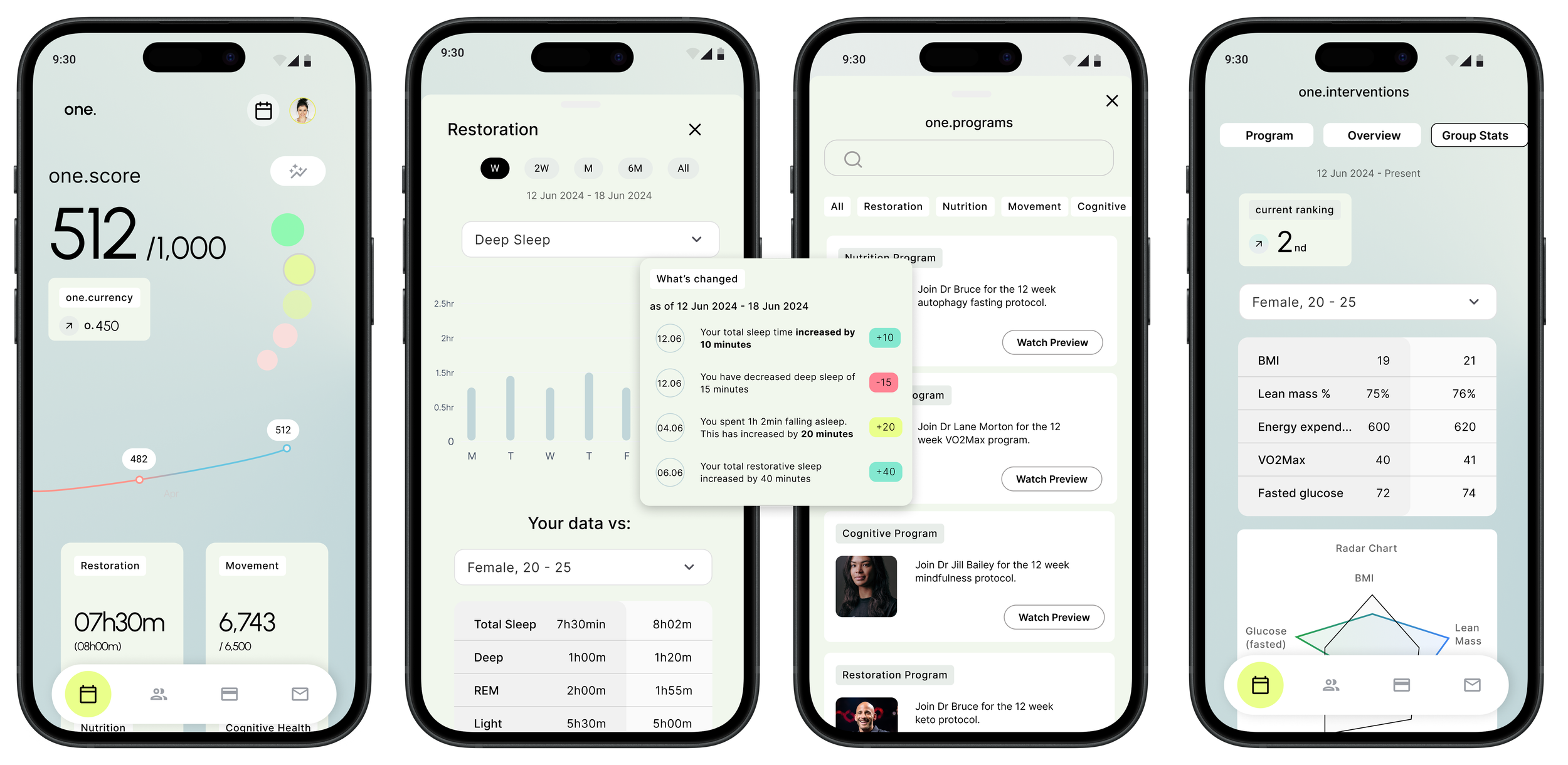
LIFE INSURANCE APP

Reframing Life Insurance
From static risk assessment to dynamic health intelligence
The Challenge
Life insurance underwriting is static, opaque, and transactional.
Customers are evaluated once, categorized into a risk bucket, and priced accordingly — with little visibility into why or how to improve.
At the same time, wearable data, biometric tracking, and behavioral analytics have made continuous health insight possible.
The gap:
Insurance models haven’t evolved to reflect how dynamic health actually is.
AI-Powered Healthspan Credit System: A Concept
The Opportunity
What if life insurance behaved more like a credit system — where your health behaviours directly influenced your risk profile?
Instead of being judged once, you could continuously improve your position.
This reframes insurance from a product you buy to a system you participate in.
The Core Idea
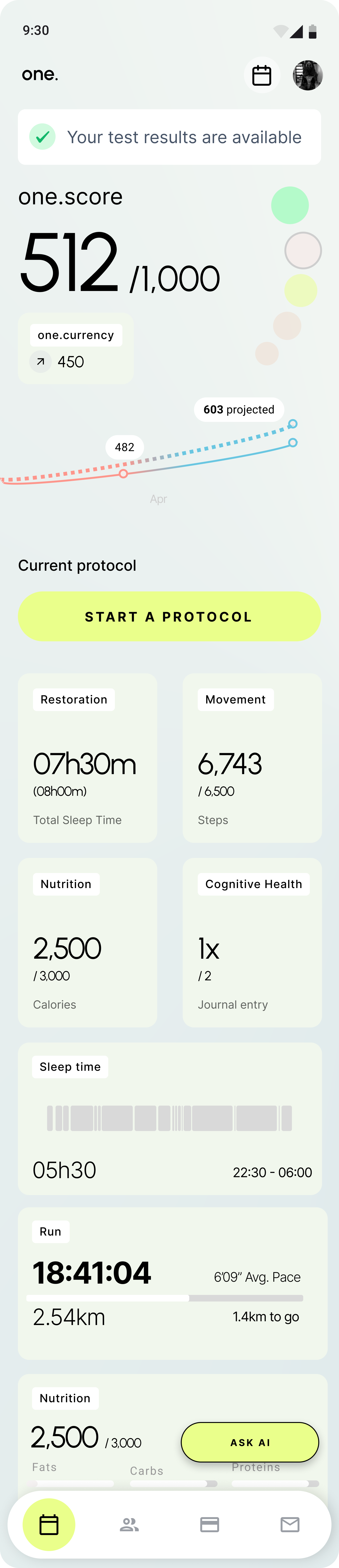
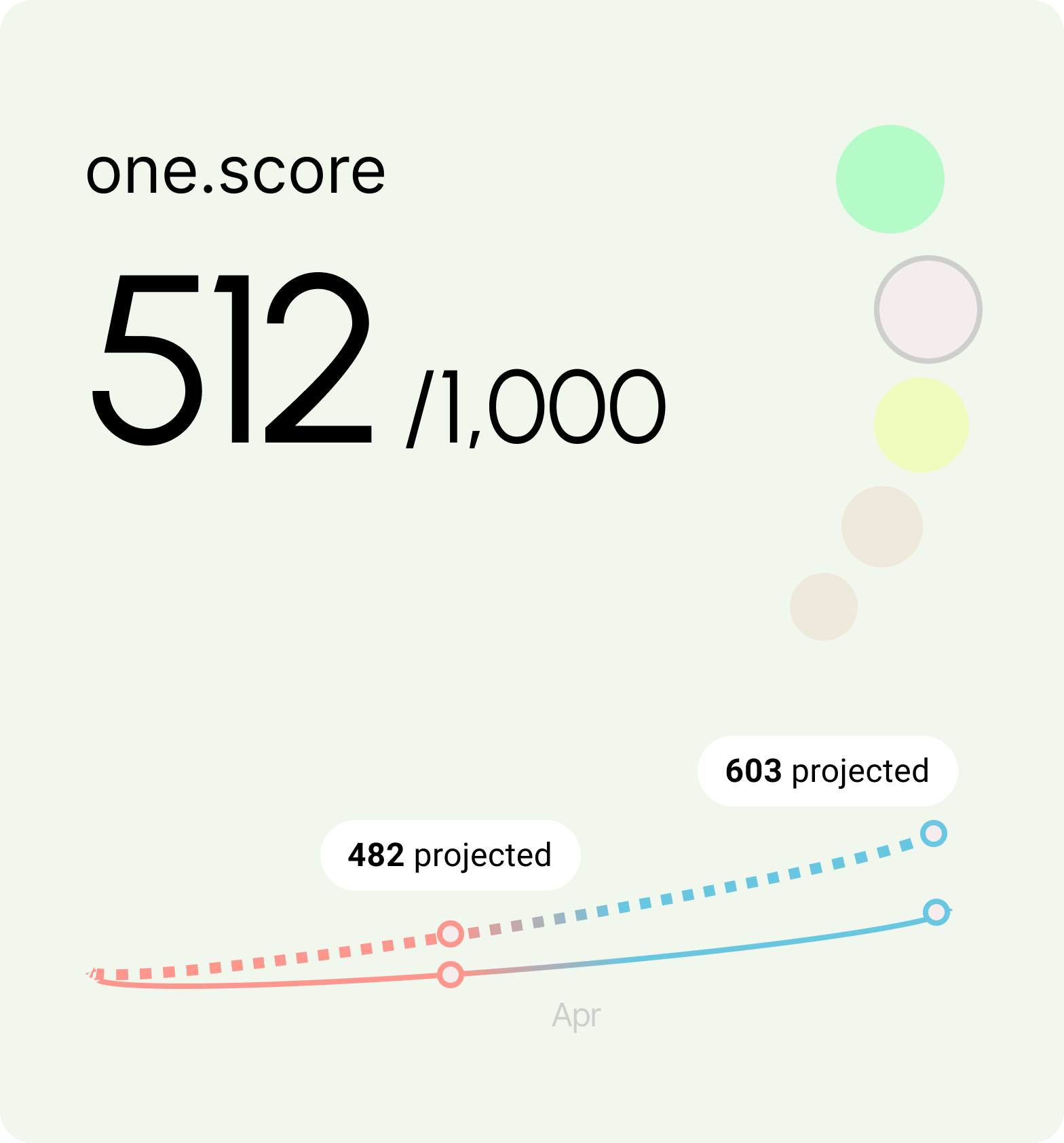
Design a dynamic, AI-powered “Health Credit Score” that reflects a user’s projected healthspan — not just their medical history.
This score becomes the core driver of:
Underwriting automation
Premium pricing
Dynamic risk tiering
Rewards eligibility
Preventative health engagement
Health becomes measurable, improvable, and financially meaningful.
The goal was alignment:
What’s good for the customer’s longevity must also reduce insurer risk.
UX Strategic Role
As UX Strategic Lead, my focus was not on the interface first — but on designing the behavioural ecosystem behind it. I led the experience strategy across product, behavioural design, and risk communication.
Product: Life Insurance Digital Product
Domain: Digital Health
Role: UX Strategic Role
Users: Policy Holders
Platforms: iOS mobile app, Wearable device
Focus: Delivering an AI-powered Health Credit Score app that reframes current life insurance onboarding and health improvement
Tools: FIGMA, Confluence, JIRA, Maze
My Role:
Translate complex actuarial logic into a simple, trusted mental model
Align business incentives with user wellbeing
Design motivation without fear-based framing
Ensure clarity in how movement between risk tiers occurs
UX Principles
Make risk understandable
Abstract health modelling translated into a single, legible score.
Make improvement actionable
Clear behavioural pathways tied to measurable outcomes.
Make progress visible
Users see movement, not static categorization.
Design for trust
Transparent explanations without exposing proprietary modelling.
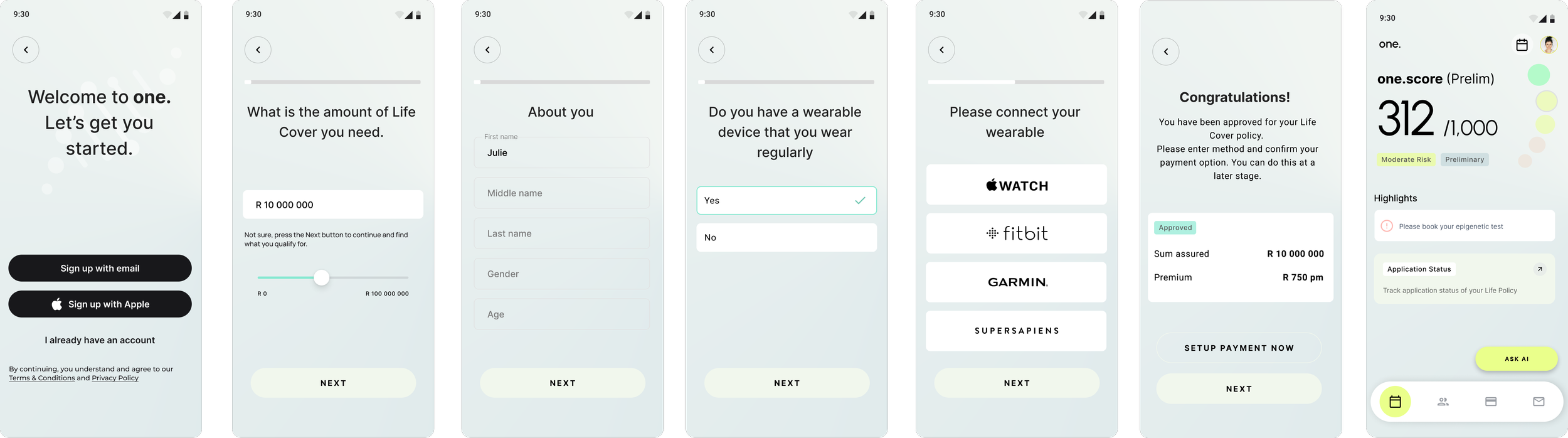
User Journey: Intelligent Onboarding

User-centred underwriting journey, powered by human data.
This onboarding flow was designed to:
Reduce underwriting friction for low-risk users
Increase perceived fairness through behavioural inclusion
Maintain compliance with traditional risk frameworks
Establish long-term engagement from day one
The result is an experience that feels intelligent, personalized, and outcome-driven — while preserving the compliance for policy decision-making.
A personalized AI-driven recommendation engine supports score improvement.
The Protocol Engine

User Experience Interface
App AI Layer
Large Language Model
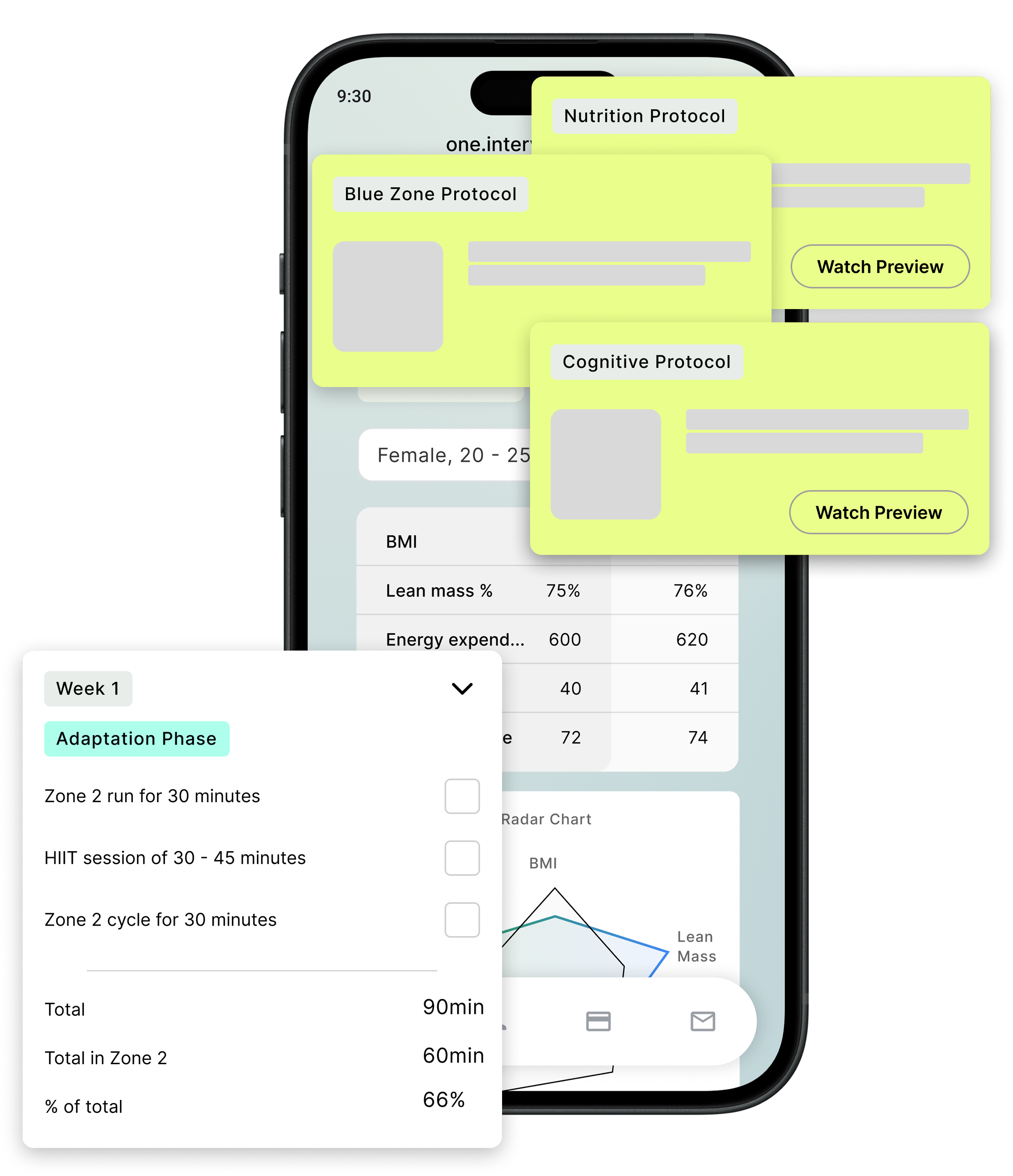

The Final Product (Concept)
A speculative but strategically grounded concept that reframes insurance as a mutual longevity system — where better health outcomes directly align with business performance.