PROVINCIAL ROAD & LAND SYSTEMS
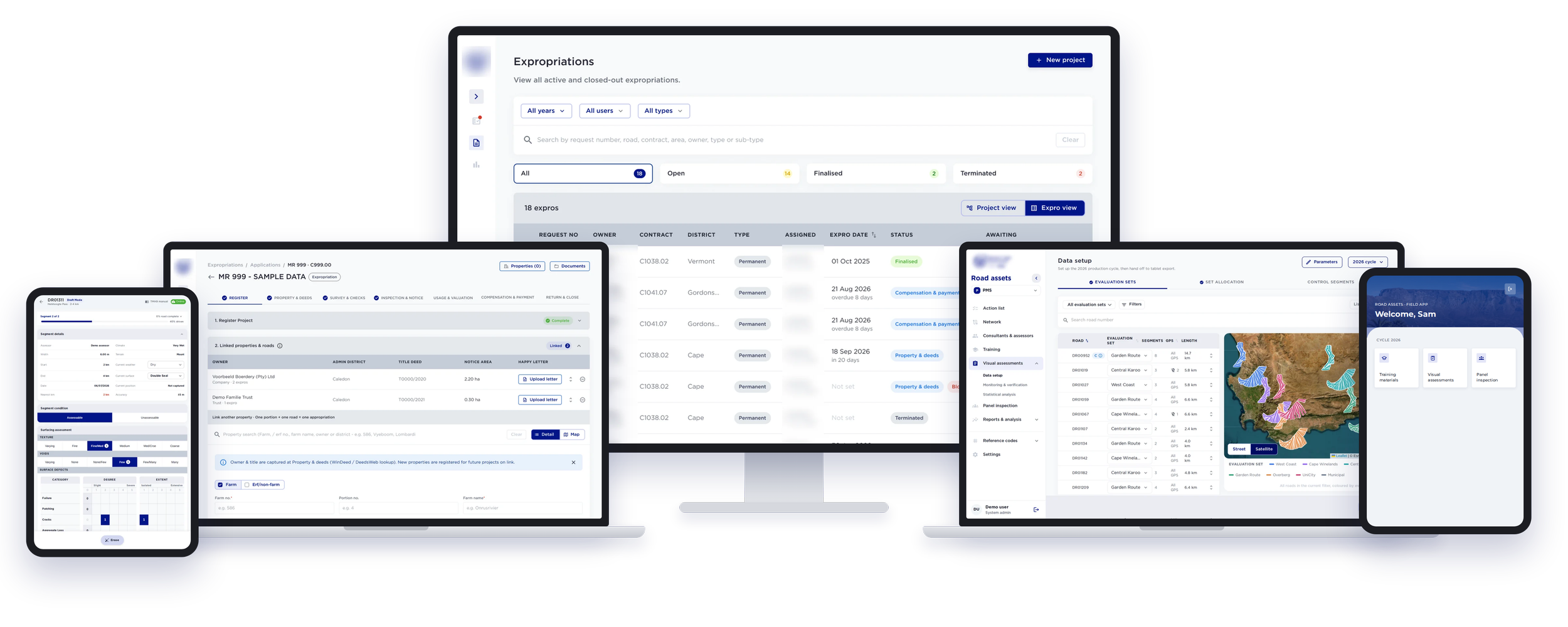
Two platforms for the Western Cape Government’s road network: one for acquiring the land a new road needs, and one for assessing the condition of the roads already in use.
USERS
Government Officials
ROLE
Lead Designer
TIMELINE
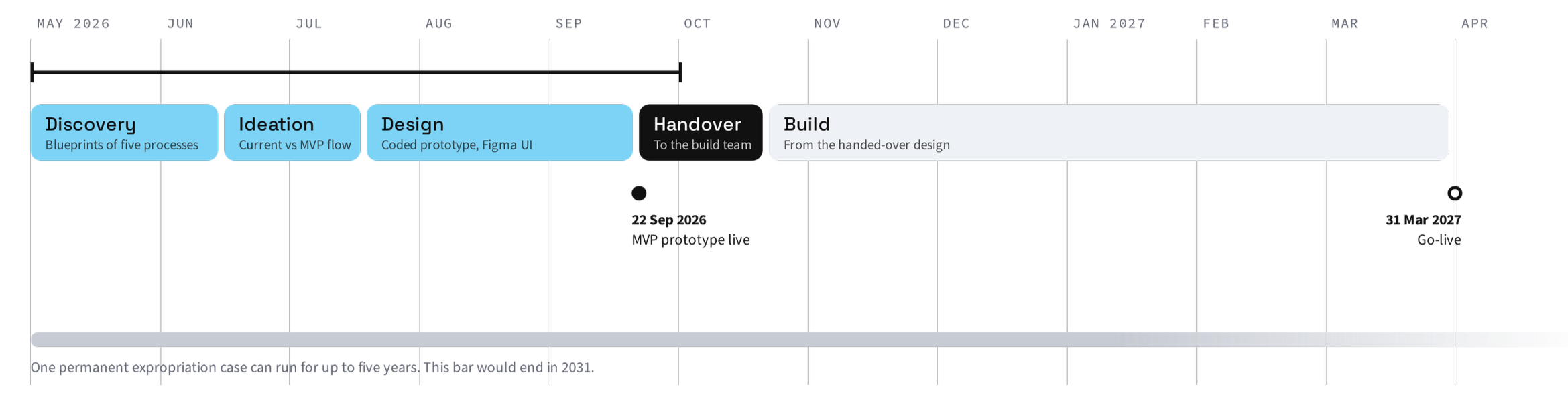
May - Sept 2026
PLATFORM
Web
Services: discovery synthesis, flow mapping across four expropriation types, a clickable prototype, MVP definition and UI direction.
Land cases for new roads can run for up to five years, yet nothing tracked where they stood. The legacy system only ran in Internet Explorer behind a VPN, and one user described it as “a glorified storage method”, so the real record lived in one official’s Excel tracker, in email, in personal folders and in people’s memory.
The Challenge
7 DAYS
To retrieve a paper file from the registry
5 YEARS
The longest a permanent case can run
245
Working days for one investigation step
3
People on the expropriation team
Discovery
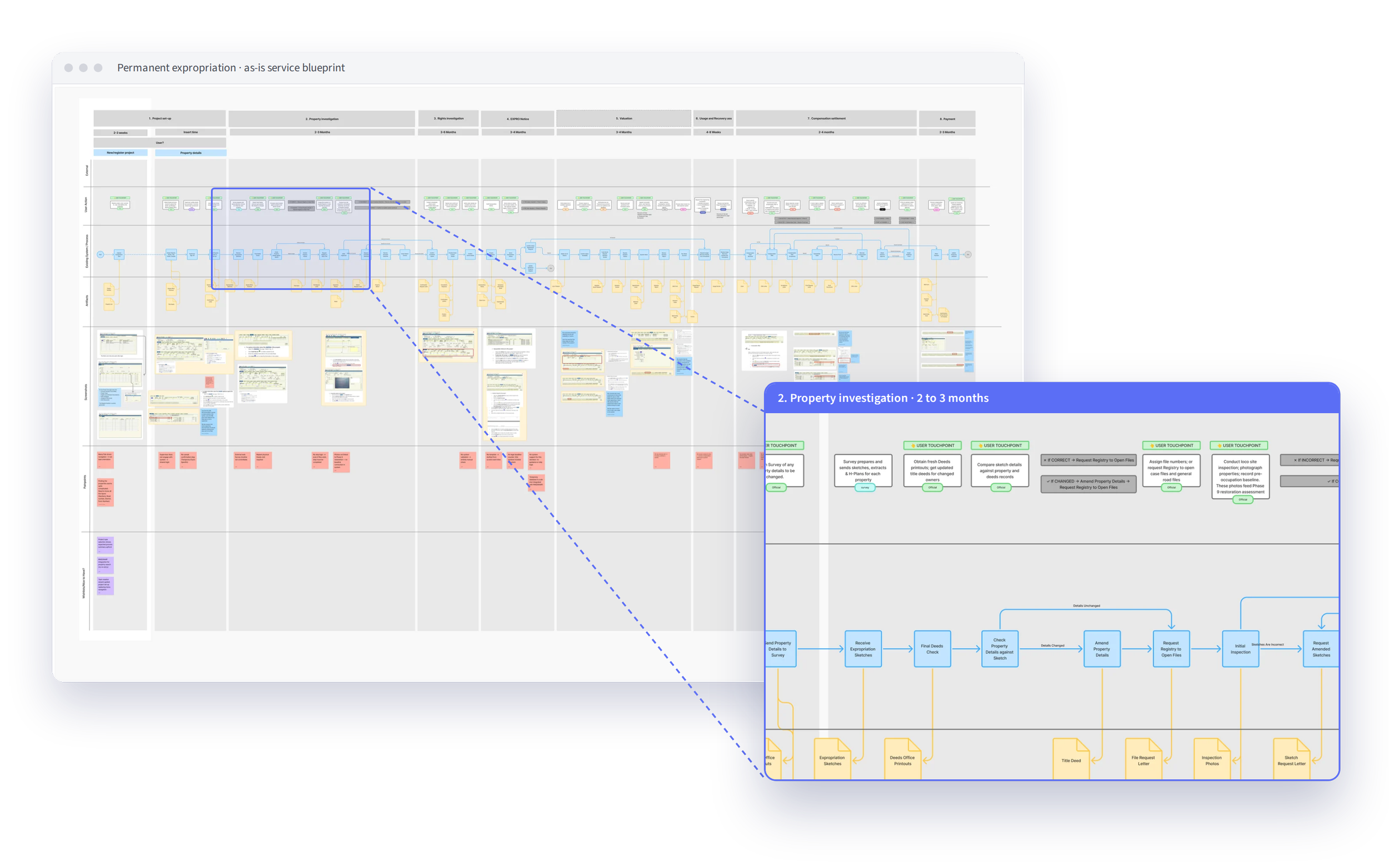
We mapped every step of the five land processes from screenshots of the legacy system, tagging each one by where it actually happened. Because the brief was to design a new process rather than lift and shift the old one, we gave more weight to the people doing the work today than to the experts on the old system.
What we found
Legal windows of 20, 30 and 40 days, invisible in the system »
Make every wait visible
“Update Expro System” repeated as five separate manual steps »
Record things once
The real record lived in one person’s spreadsheet »
One shared record per case
No case had ever reached the Transfer phase »
Support every phase, not just the first
Ideation
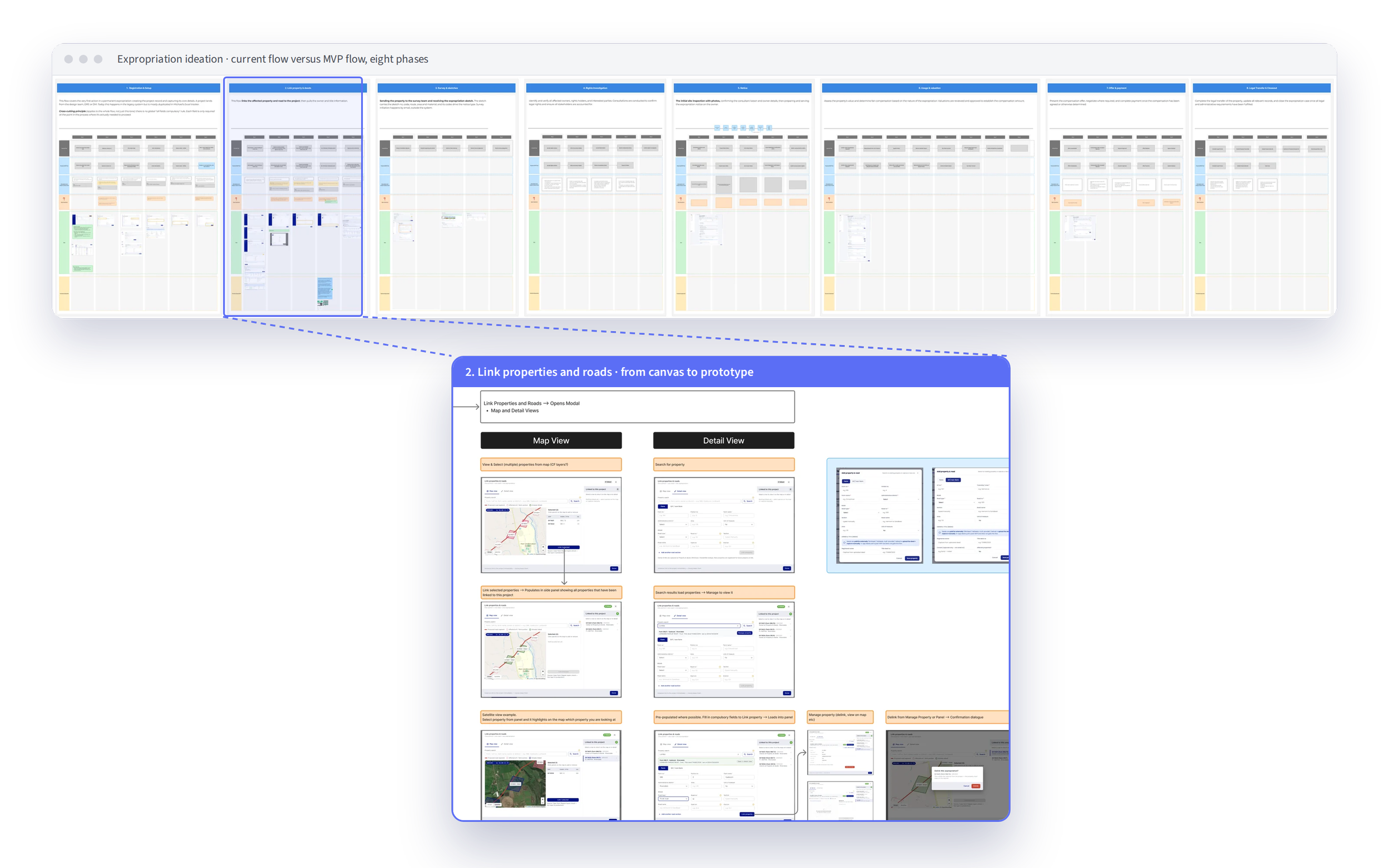
Each phase went through the same canvas with the developers, comparing the current flow with a proposed MVP flow, and was then reviewed with the officials who would be using it.
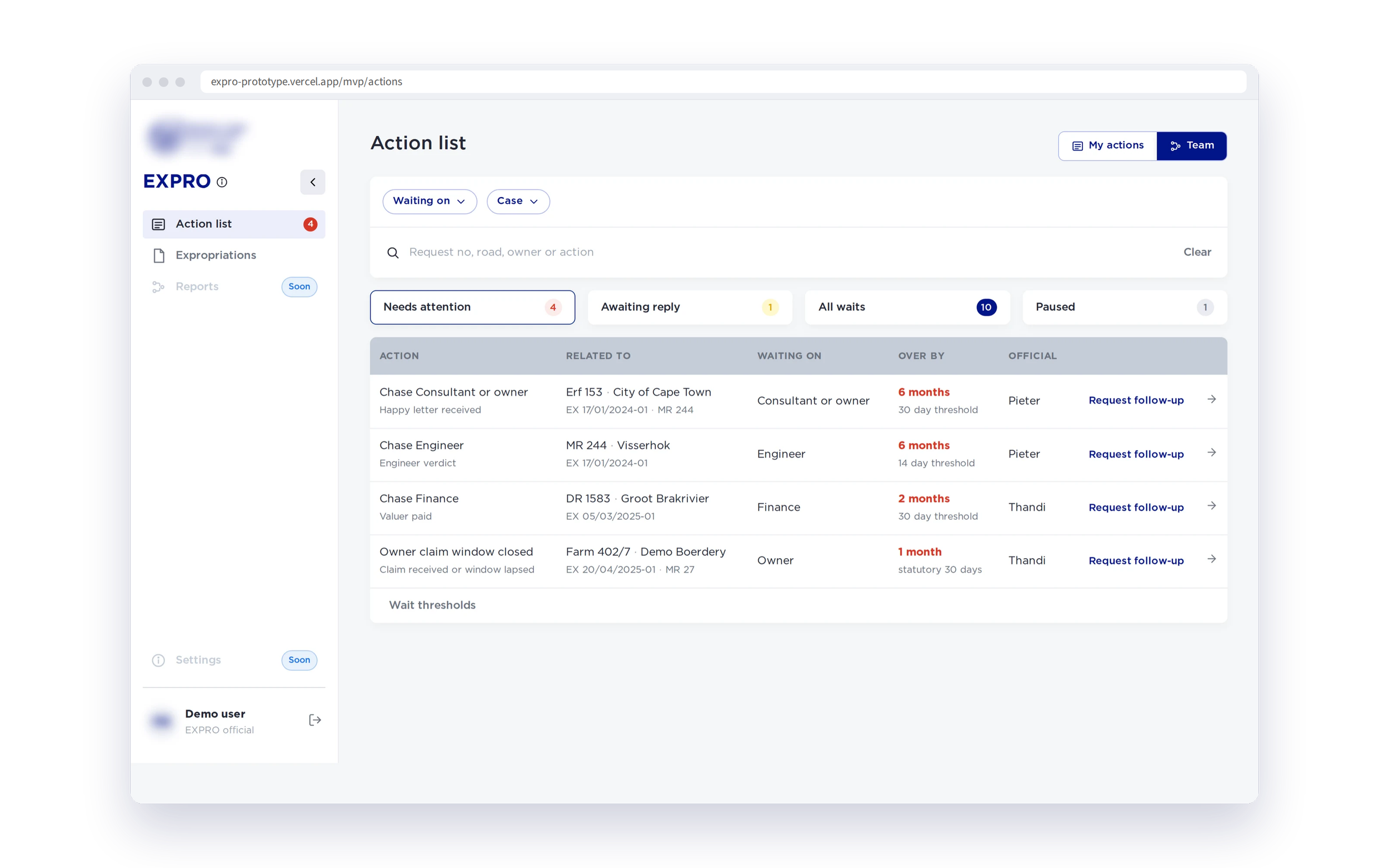
Rather than build a rigid workflow engine, we made the MVP a task tracker that shows what every case is waiting on, and for how long.
The Design
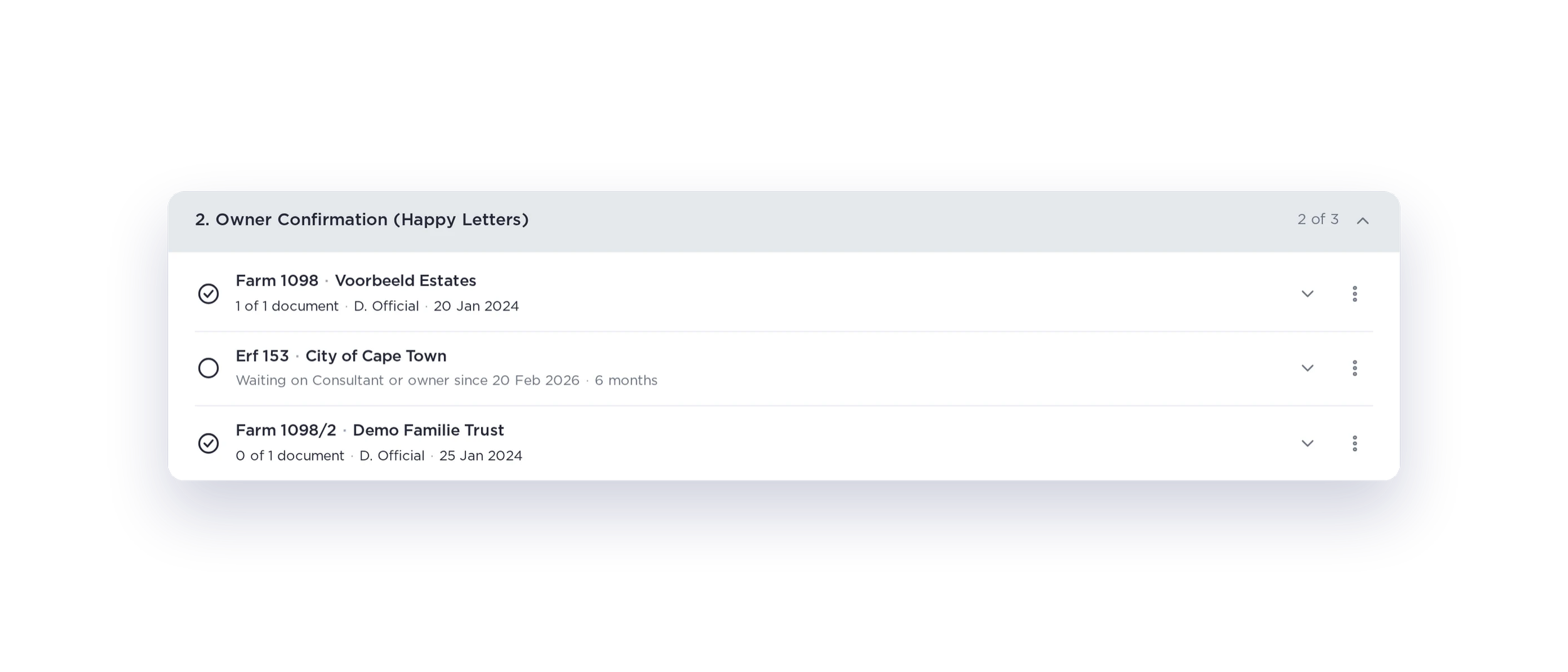
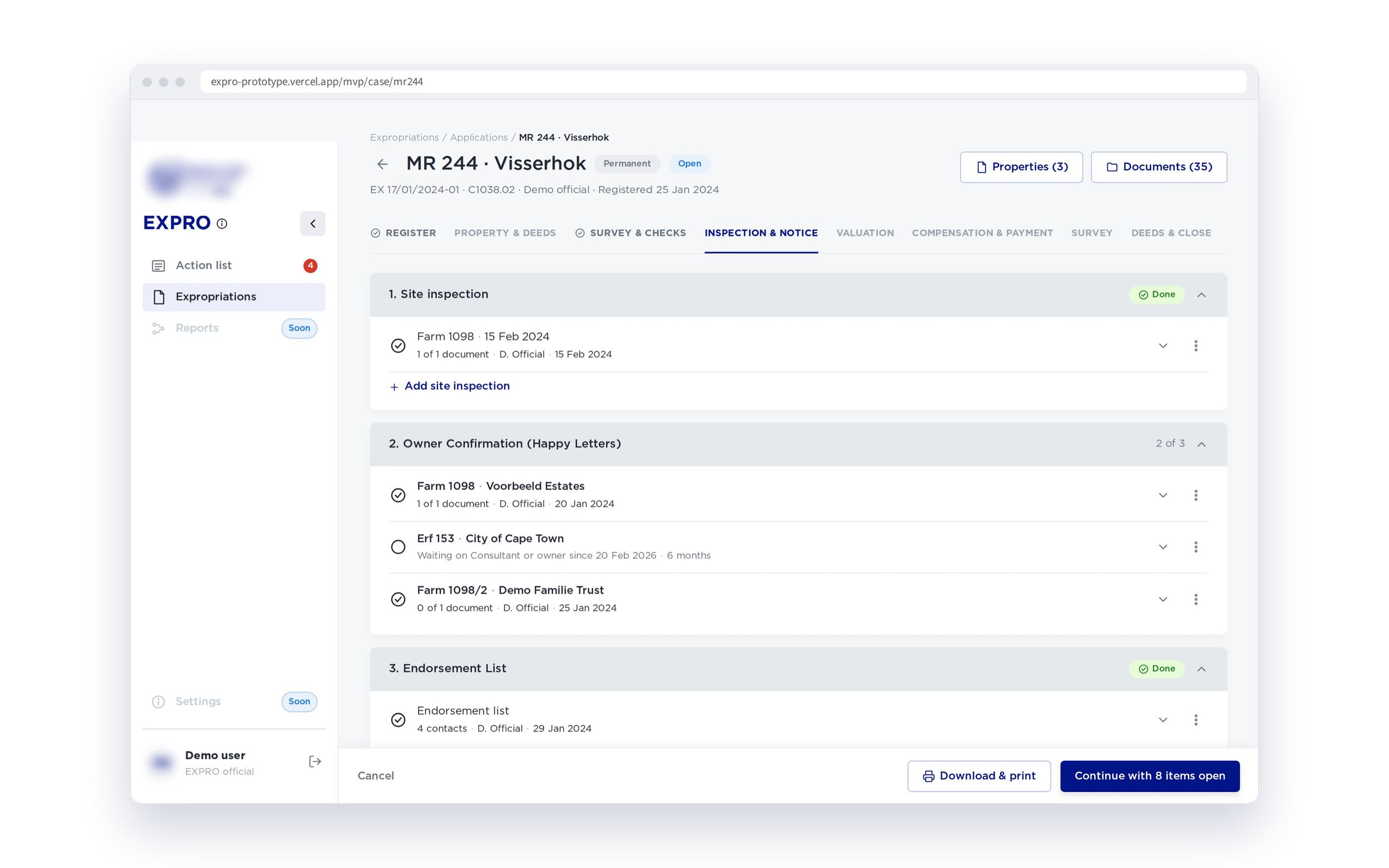
Every task is either not started, waiting on someone, done or not applicable. Marking something as requested stamps the date, so each case shows exactly how long it has been waiting, while the Action list brings overdue waits to the surface across all cases.
HUMAN FACTORS CONSIDERATIONS:
From a human factors point of view, the old process ran on prospective memory: officials had to remember what each case was waiting on and when to chase it, across cases that run for years. The task tracker takes that load off them by making every wait visible and timed.
SCOPING DECISIONS:
Rare flows, such as transferring road land to the national roads agency, were deliberately kept as simple record-keeping. The MVP was then descoped to what the system needs to track, while keeping the full prototype’s structure intact, so the next phases can be built without redesigning what is already there.
As lead designer, I turned the discovery workshops into the shape of the product: synthesising what we learnt, mapping the flows across all four expropriation types and setting the MVP scope with the client, which meant deciding together what to leave out as much as what to build.
How I worked
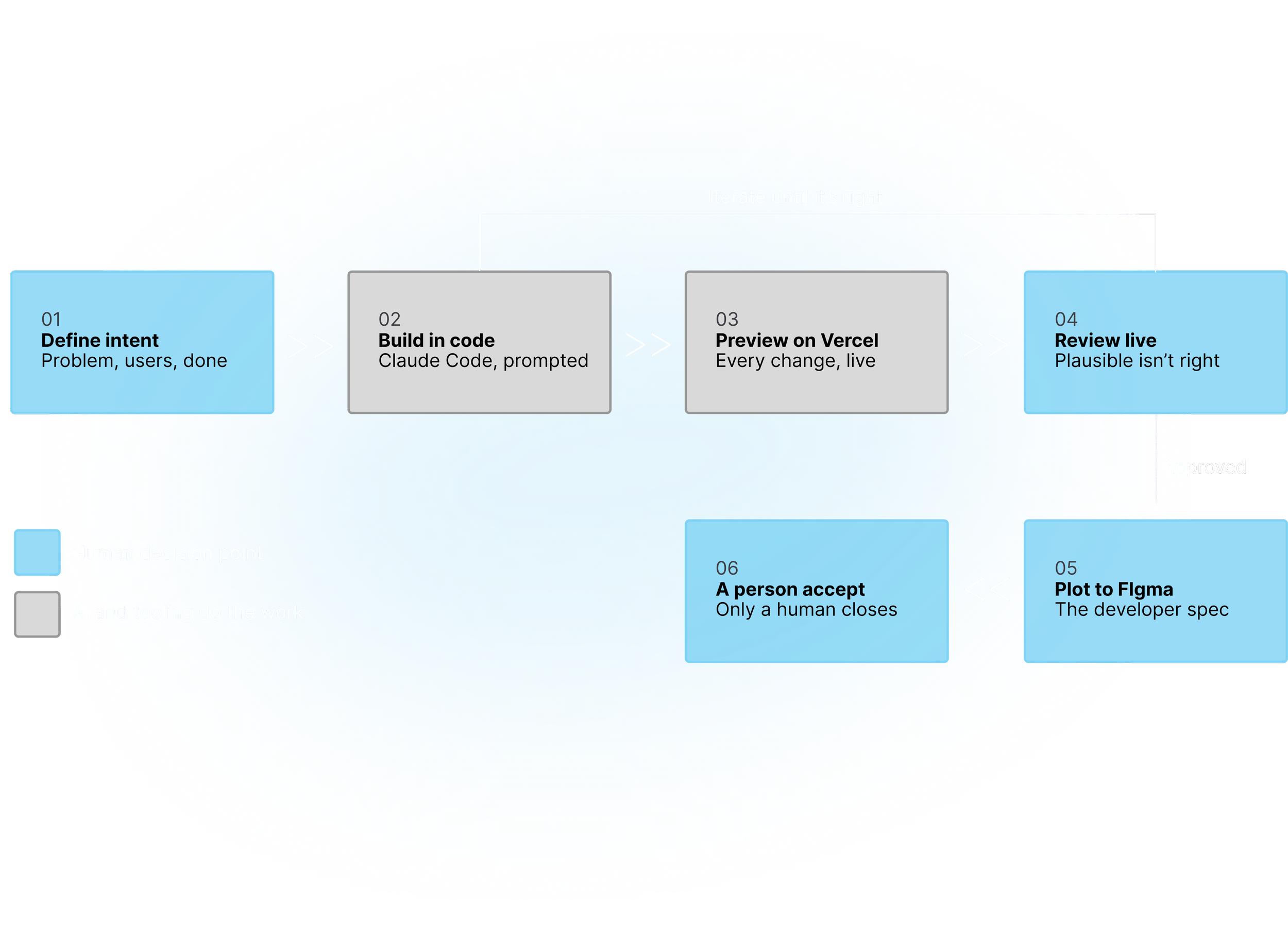
This engagement also marked a shift in how I design. Alongside the traditional discovery toolkit of stakeholder interviews, field observation and process mapping, I ran an AI-accelerated workflow, prototyping in code, reviewing flows live with the officials and handing approved designs over in Figma, so real feedback arrived while it could still easily shape the design.