CLINICAL APP
Product: Remote Clinical Sleep Monitoring Platform
Domain: Digital Health / Sleep Medicine
Role: UX Lead
Users: Patients, Clinicians
Platforms: iOS mobile app, Web-based clinician dashboard, Wearable device
Focus: Delivering clinical-grade sleep insights in natural, at-home environments
Tools: FIGMA, Confluence, JIRA, Maze
Project Overview
The Problem
Traditional sleep studies don’t reflect how people actually sleep.
In-clinic environments heighten anxiety and disrupt natural sleep patterns
Data captured is clinically precise but behaviourally distorted
Clinicians lack reliable longitudinal data from real-world contexts
Patients feel disconnected, anxious, and passive in the process
Design goal:
Enable accurate, continuous sleep monitoring at home — without compromising human comfort, trust, or clinical reliability.
The Product
Delivers clinical-grade accuracy using consumer wearables
Ensures interoperability between app, clinician dashboard, and device
Enables real-time data flow and continuous monitoring
Translates clinical data into actionable, personalised insights
Maintains trust, usability, and regulatory compliance
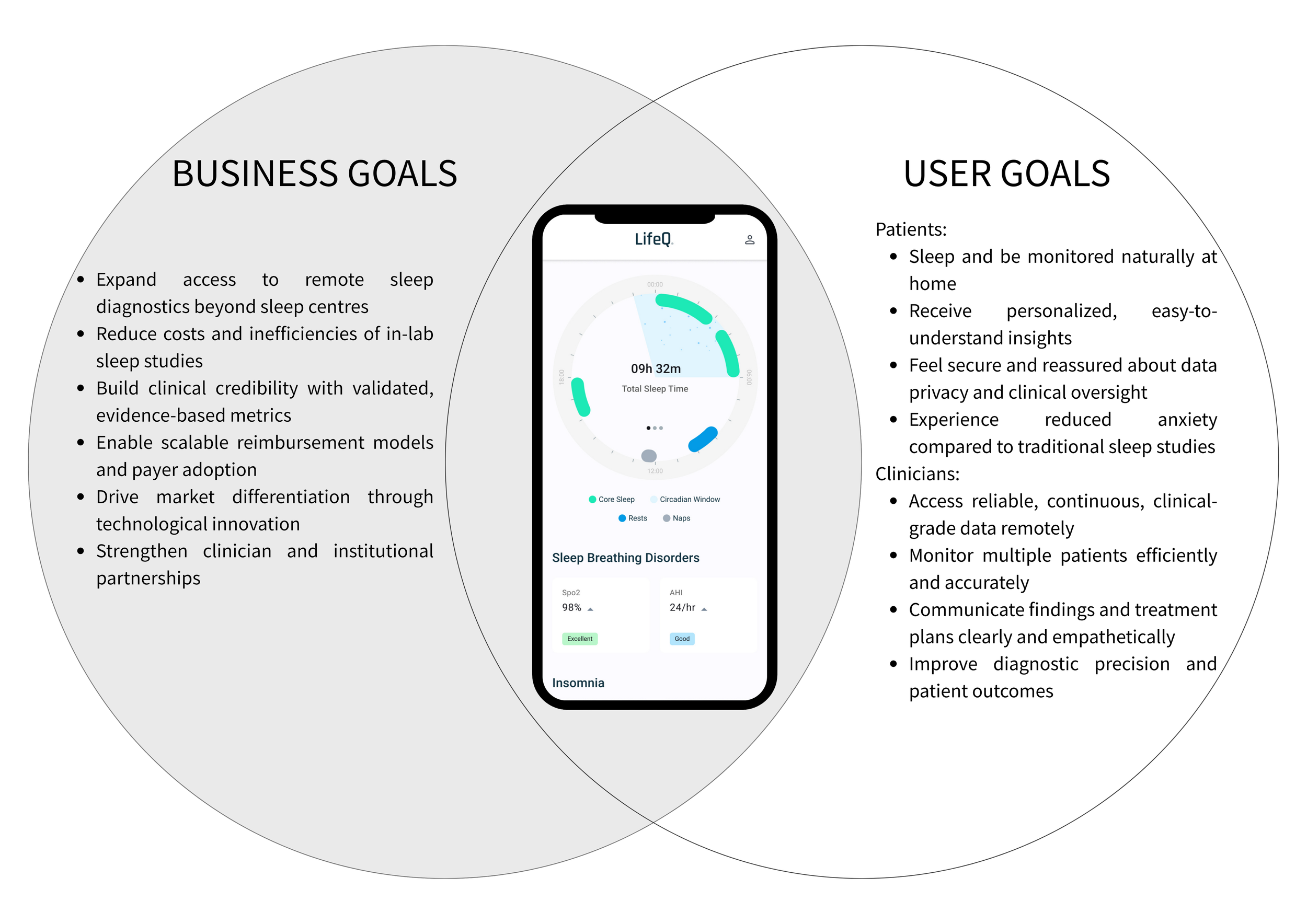
System Overview: A Connected Health Ecosystem
This was a system problem, not a single-interface problem. Designing these components in isolation would have failed.
UX focus: Ensure seamless data flow and consistent meaning across all three entities.
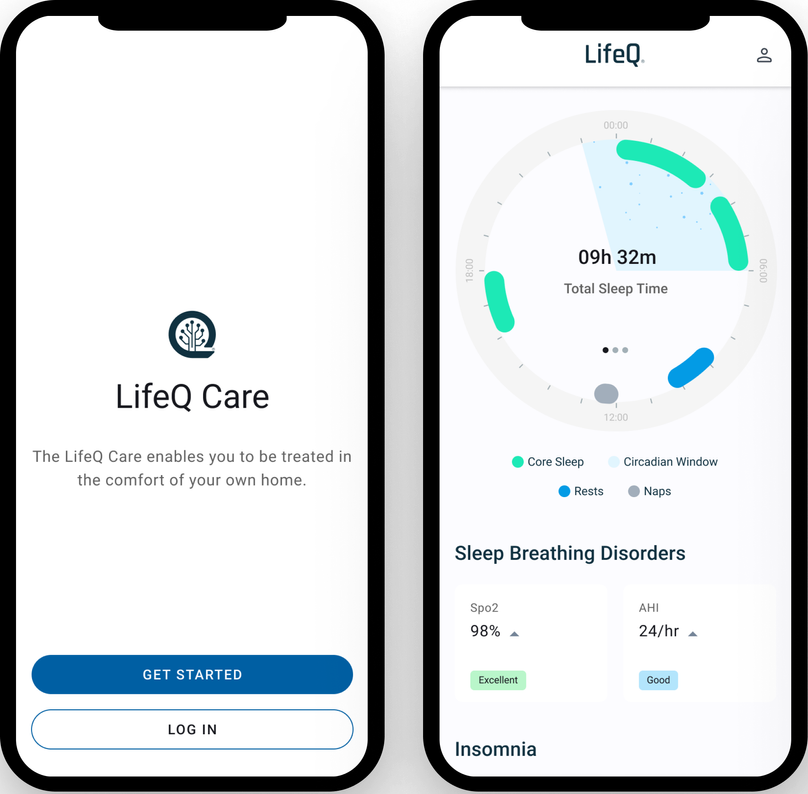
Patient Mobile App
Providing guidance, context capture, reassurance, and daily interaction.
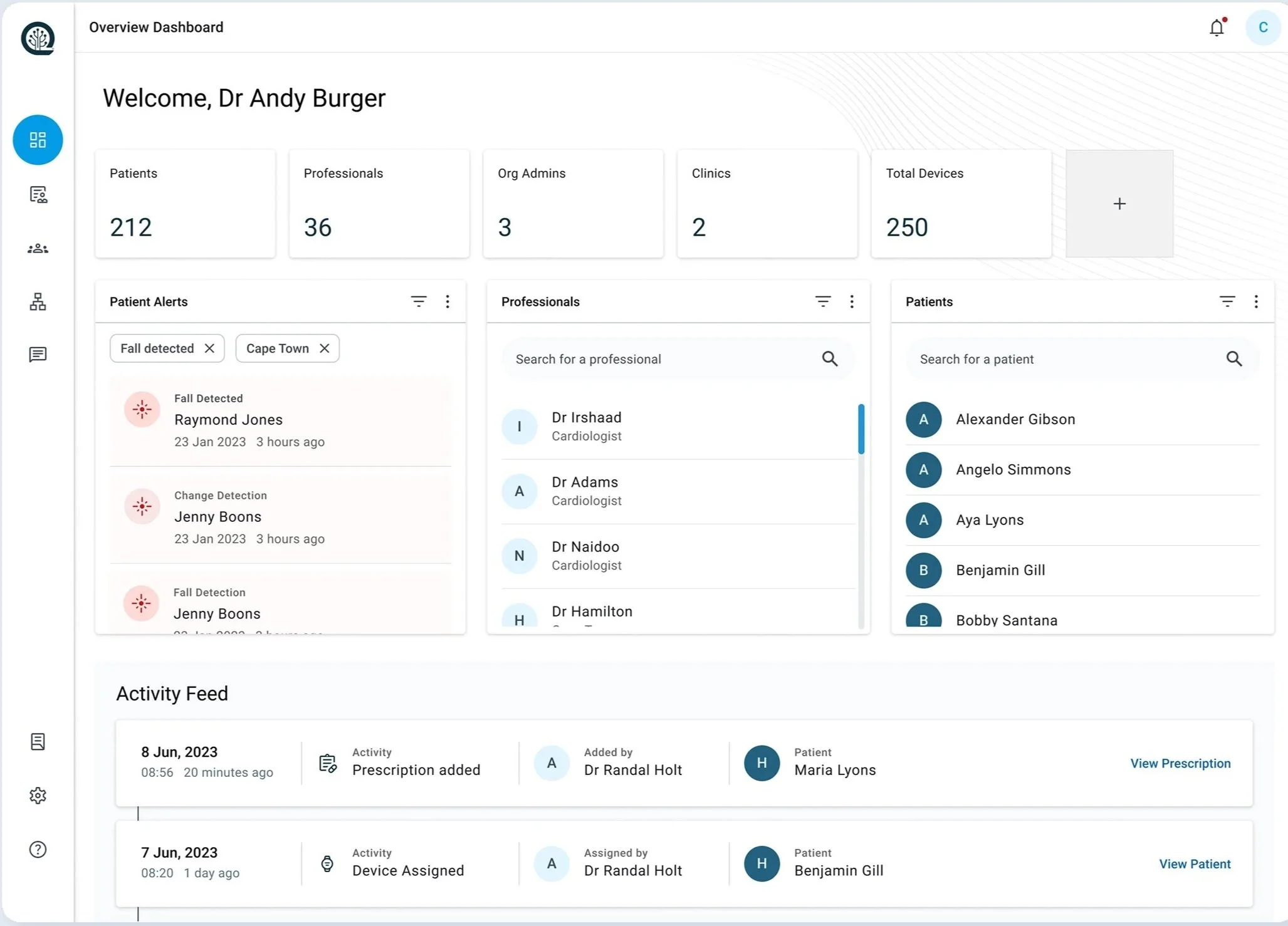
Clinician Dashboard
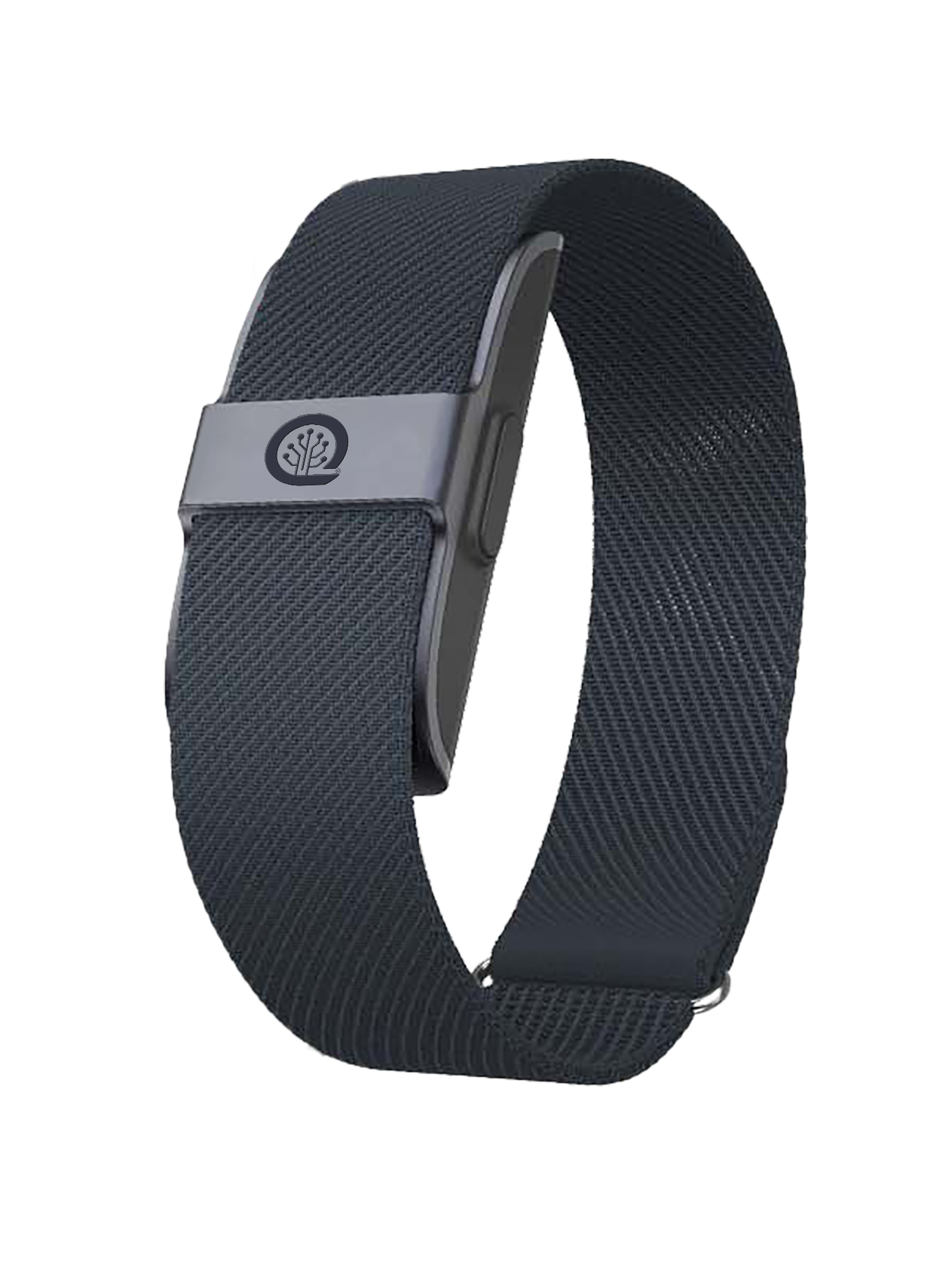
Wearable Device
Supporting real-time monitoring, interpretation, and clinical decision-making.
Continuous biometric data that feeds patient and clinician experiences.
UX Leadership Challenge
The central UX challenge was balancing clinical precision with human sensitivity.
Patients interacting while fatigued, anxious, or uncertain
Clinicians working under time pressure with high data density
Clinical precision required without overwhelming vulnerable users
Emotional reassurance required without diluting medical credibility
Every design decision had to meet both needs without oversimplifying clinical insight or overwhelming vulnerable users. This required deliberate prioritisation, restraint, and system-level thinking on the app rather than feature accumulation.
Cognitive Ergonomics and Human Factors
Patient Experience: Guidance, Reassurance & Engagement
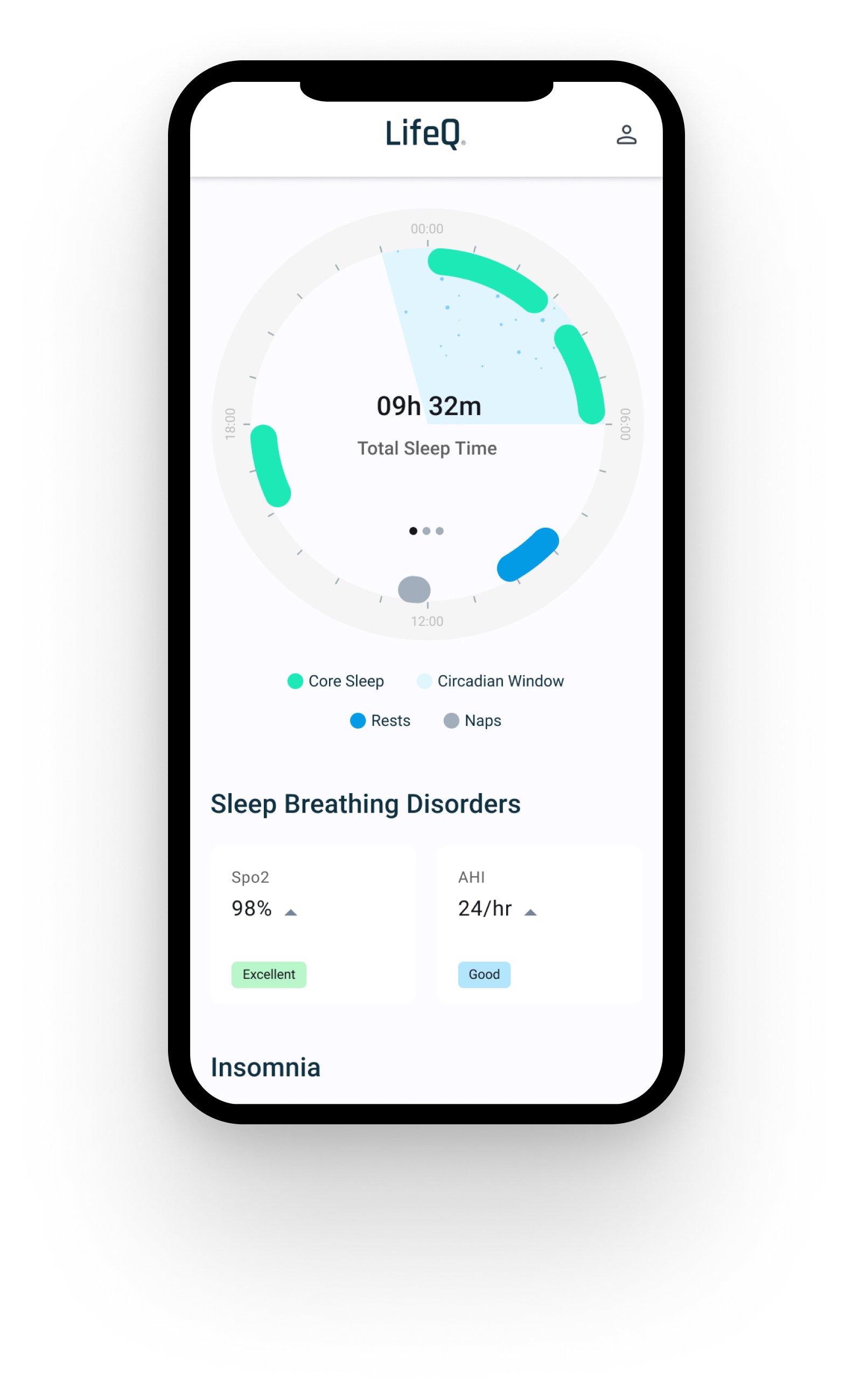
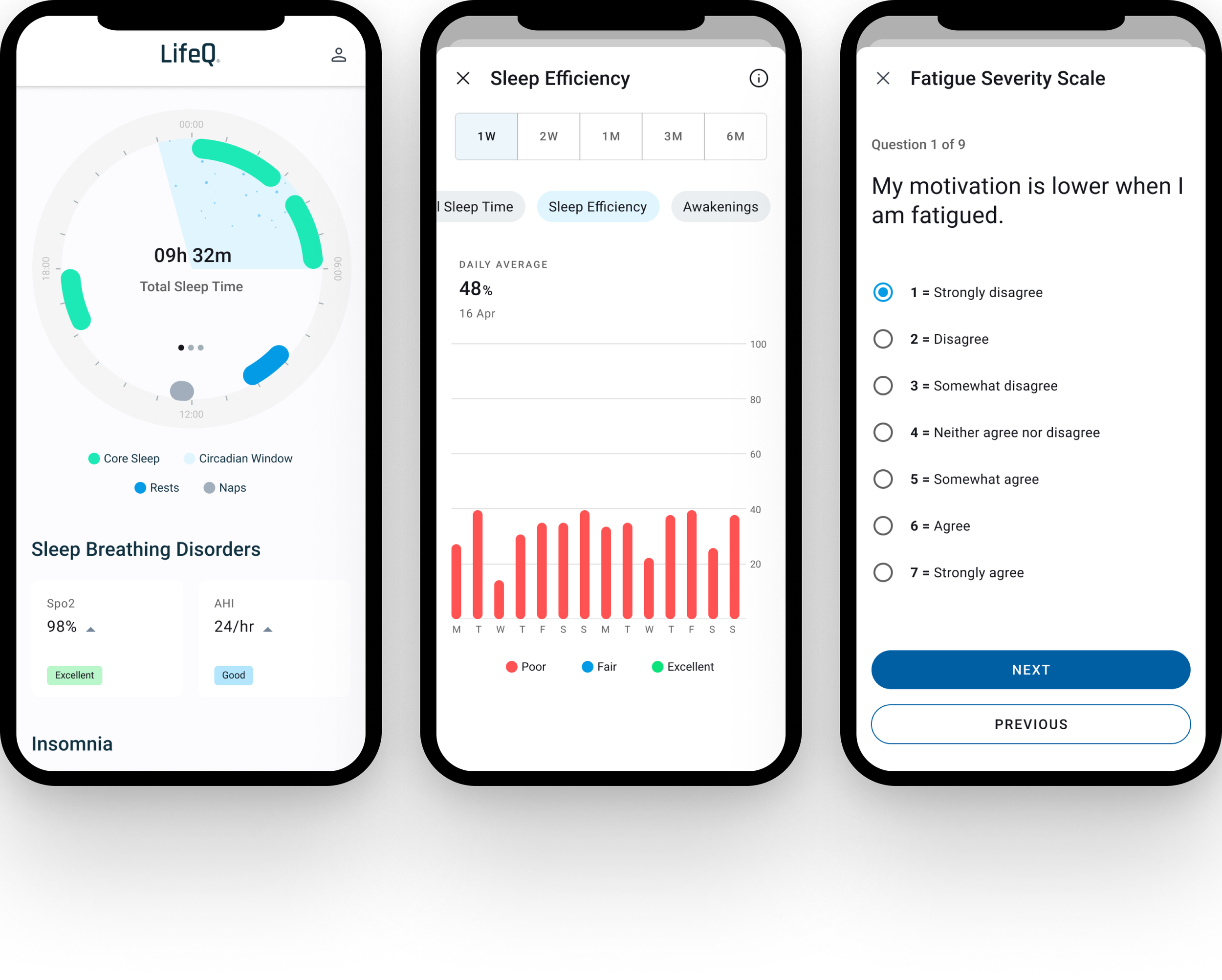
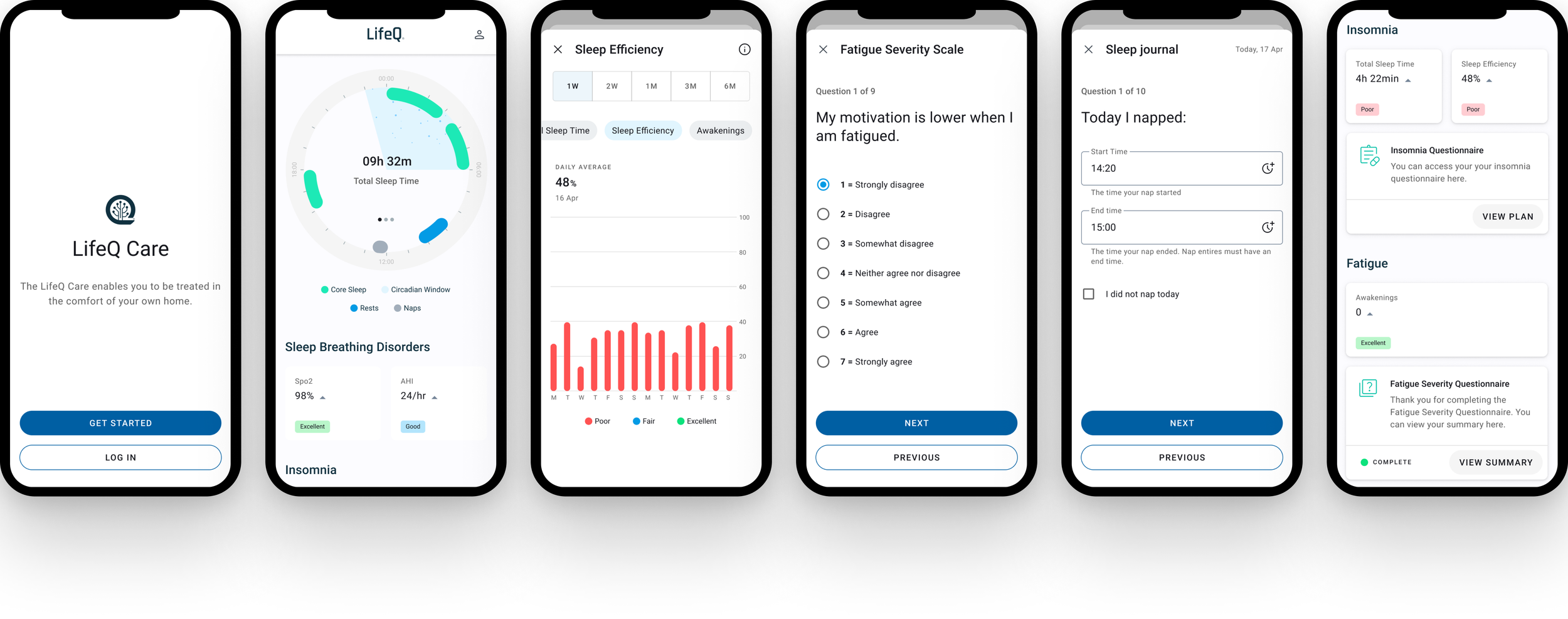
Pattern-based sleep visuals support quick recognition over interpretation
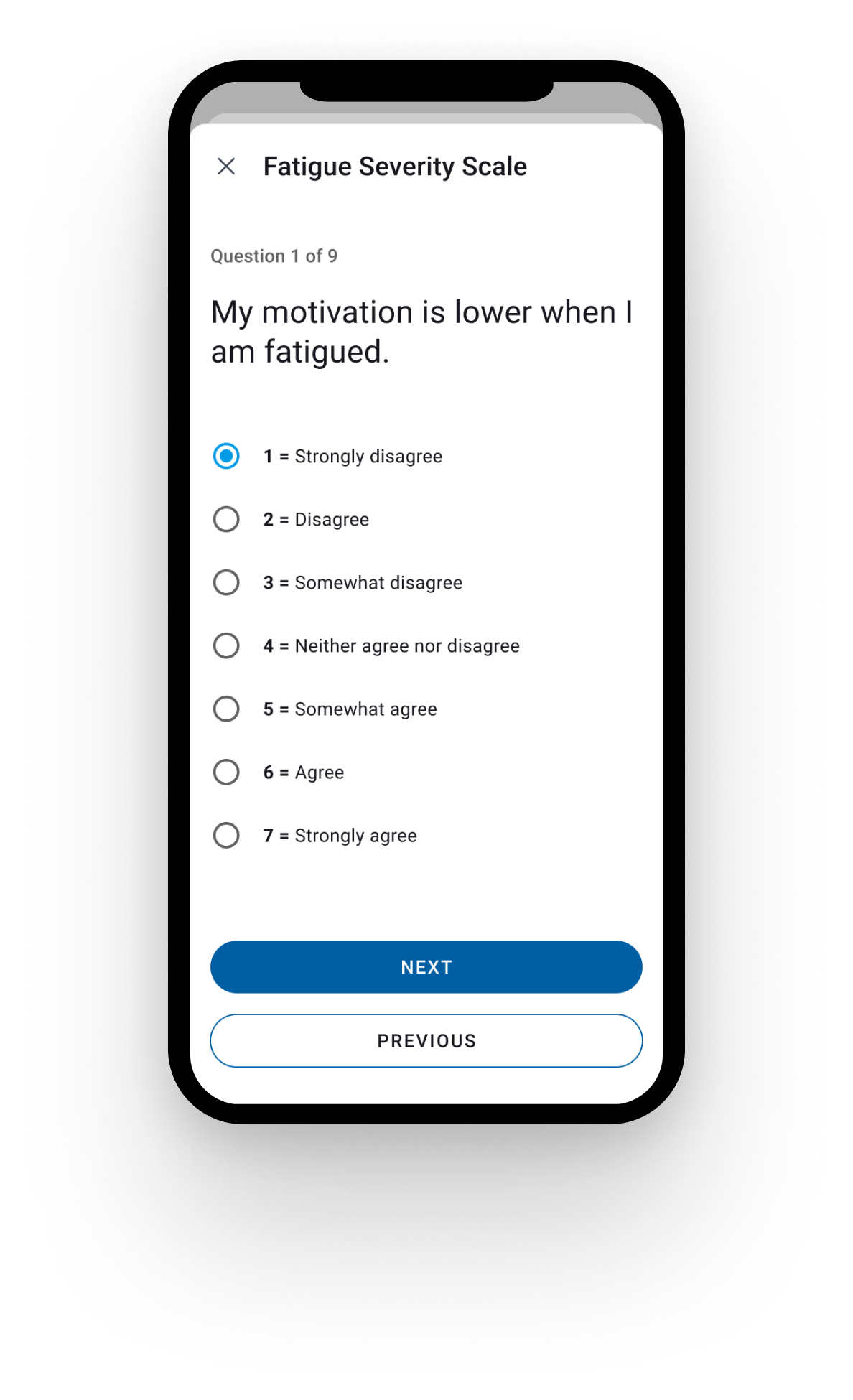
One-question-at-a-time inputs respect fatigue and limited attention
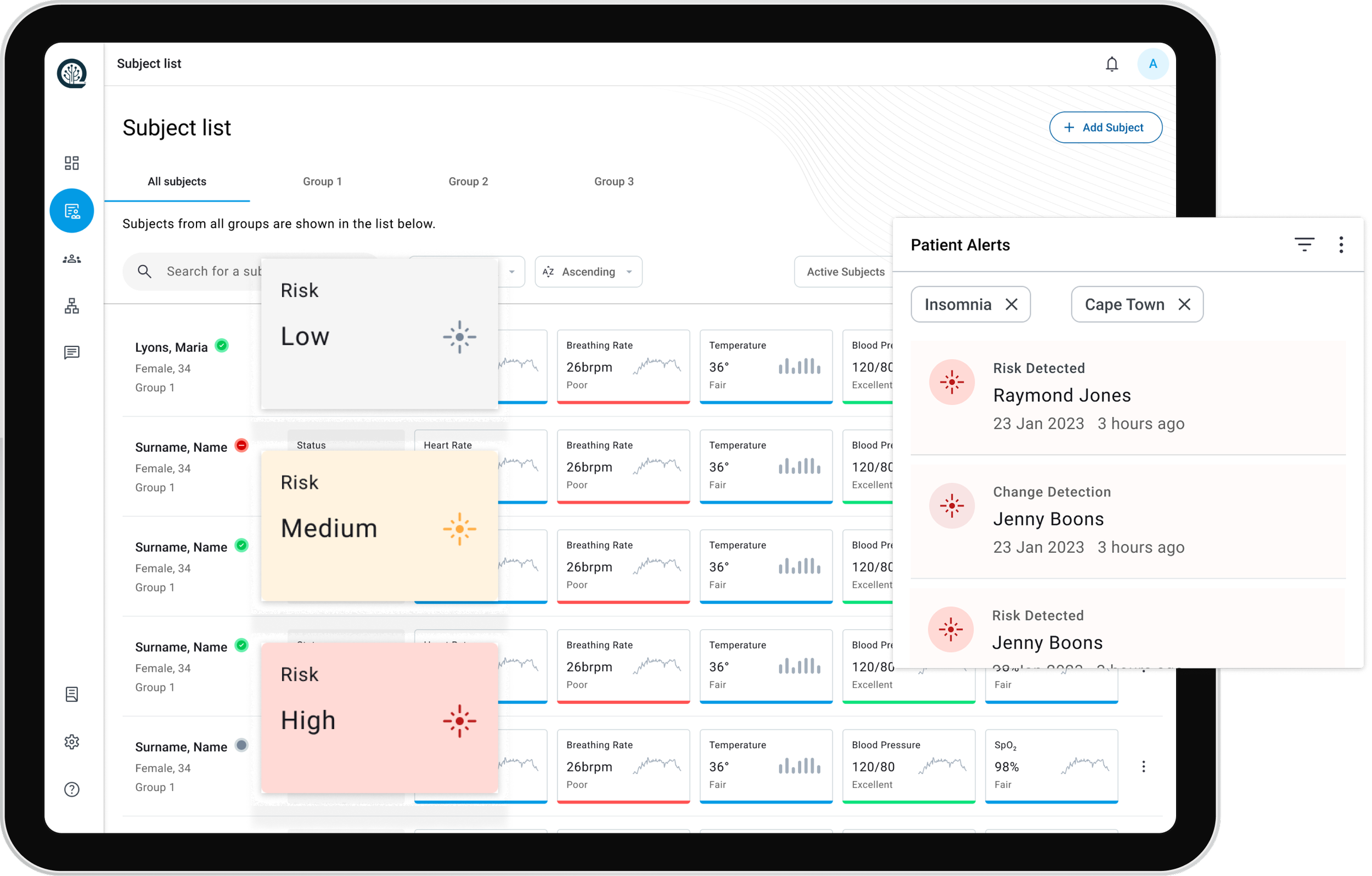
Clinician Experience: Sensemaking & Decision Support
Threshold indicators reduce interpretation effort.
Trend-first views support longitudinal sensemaking.
Key Design Decisions & Trade-offs
Several deliberate trade-offs shaped the final experience:
-
Avoiding raw data exposure for patients
While technically possible, exposing granular physiological data risked increasing anxiety without improving understanding.
-

Restrained configurability
Not all settings were user-configurable; defaults were carefully chosen to reduce decision fatigue and error.
-

Reassurance over gamification
In a clinical context, calm feedback and clarity were prioritised over motivational mechanics that could undermine trust.
The Final Product
The result was a patient-designed sleep monitoring app that:
Enabled continuous, real-world sleep monitoring at home
Maintained clinical-grade data reliability without lab distortion
Increased patient comfort through a calm, human-centred experience
Provided clinicians with rich longitudinal sleep insights
Reduced anxiety through clear guidance and supportive framing